Saturday, September 29, 2007

Freegans and Frugality


I'm belatedly reading this week's Newsweek, having been on a business trip the last several days. There are two stories -- a first-person account and a companion article -- about living the "freegan" life, a term that was new to me. Freegan (vegan + free) describes people who essentially step off the consumerist grid to minimize their ecological footprint. Reporter Raina Kelley kept a diary of a month in which:
I would be a vegan who bought nothing but local and/or organic food. I would use only ecofriendly transportation, cut my electricity bill in half and erase my carbon footprint. My mantra would be "recyle, reuse, renew," while never forgetting to reflect on my impact on the Earth before acting. ... That's tough work for an eBay-loving, omnivorous, cigarette-smoking shopaholic. ...

The American way of life has to change if we want to do something about global warming. But it's not [easy]. It's time-consuming, confusing and infuriating. I was doing fine, living my little piece of the American Dream, and now the inconvenient truth is that I feel bad about it. ...

I haven't been the same since I pitched this story. I see waste everywhere. I feel guilty about everything--doing my laundry, spending a day at the mall, leaving my computer on at night, relaxing in the shower, BUYING FOOD AT THE GROCERY STORE. How can absolutely everything I've been taught to do to survive be wrong?
Kelley's Freegan Girl blog recounts her whole month. She staggers to the end of the experiment describing herself as only a step away from losing her mind, but comes out of the experience with a new dedication to moderation and a list of workable ways in which to be part of the solution.

The companion article by Jerry Adler compares the freegan movement to the "Utopian and religious communities, ... hermits, mendicants and holy fools who have been rejecting the corrupting influence of civilization since it was invented." He acknowledges the validity of their critique of the excesses and wastefulness of postindustrial consumerist culture, but suggests that the world's poor would be better off if we contribute to our economy and share our surplus wealth with them, rather than "competing with them for it." Ouch.

Freegan goals remind me of much of the frugal-living advice found in two books that helped me through several years of raising a family on a single income when I was staying home with my girls when they were young -- compilations of what used to be a monthly newsletter called The Tightwad Gazette, written by Amy Dacyczyn. Our Depression-raised parents or grandparents, too, have always known that it was possible to reuse that aluminum foil, take the bus or walk, repair that lamp, get the last teaspoonful of ketchup from that bottle, or scrape the burnt bits off our toast. Frugal, minimal-impact living isn't new, but it may feel new and particularly meaningful to a generation that is doubly conscious of its comfortable upbringing and the need to make lifestyle alterations for environmental reasons.

Later in the same issue of Newsweek is an article about the recent spate of what might be considered "my year of self-deprivation" books, like Barbara Kingsolver's local-food adventure, Animal, Vegetable, Miracle, and A.J. Jacobs' The Year of Living Biblically, in which the author chronicles his year-long attempt to follow every mandate in the Bible. The article's author suggests that the popularity of such books implies that we're such an affluent society that only by taking choices away can we find meaningful direction or bring order to our modern, messy lives. I can certainly find some resonance in that thought. Having been raised in a necessarily frugal household myself, I can't imagine finding satisfaction in a life that's driven by showy spending.

My own current financial constraints (I have a good job, I hasten to add, but considerable obligations as well) lead me to live a life that avoids most consumer excesses, but I well know that the pressures of time and convenience lead me to make choices I wouldn't want held up as a public example of best sustainability practices.

Here, then, is my contribution to frugal living for the next month: I'm going to live as much as possible on what is already in my cupboards, refrigerator and freezer, finding ways to use those cans and packages and bags of rice and flour that my gaze always passes over as I decide what's for dinner. As Amy Dacyczyn noted in those Tightwad articles, the typical family can, with care, make a quicker, bigger difference to their food spending than in almost any other area -- by relying less on highly processed or pre-prepared foods, buying ingredients in bulk, and cooking simple dishes from scratch. And in a month where finances are particularly tight, living off what you've already got on hand for a period of time can make a real difference to the bottom line (and, if it means making food last longer by not eating quite so much of it, the size of the bottom). Having looked at my checkbook (ack!) and stepped on the scale (aacckkk!), I find this would be a perfect time to address both issues.

Wednesday, September 26, 2007

Physicist Discusses Global Warming on MPR

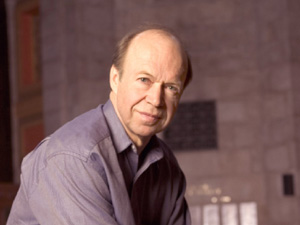
Physicist and astronomer James Hansen, lead climate scientist at NASA's Goddard Institute for Space Study, was Gary Eichten's guest on MPR's Midmorning show yesterday. It was a very interesting and enlightening discussion. Hansen views coal-burning as the activity contributing most to global warming, explains why scientists can be virtually certain that human activity is leading to the global warming we are seeing (as evidenced in part by rapid melting of the arctic ice cover), and says that if coal-fired plants converted to carbon-sequestration technology we would not have much to worry about.

Read more and listen to the show here.

Monday, September 24, 2007

Carbon Offsets & WindSource

Once in a while I travel by air. Quite a bit more often (read: just about every day) I take short trips in my aging, hail-battered little Honda Odyssey minivan (12 years old, 206,000+ miles, and keeps on ticking). I am a well-meaning person, and so I feel bad about the amount that I drive, but the reasons (helping a certain high school student get her 30-lb backpack, two musical instruments and a tennis racket to or from school; being able to run errands without a major investment of time; laziness; lack of a bicycle; dislike of being too hot or too cold or too wet; and so on -- the typical middle-class, middle-aged litany) don't go away. So I thought it was time to learn a bit more about purchasing carbon offsets.

For $36.95, I could buy a TerraPass that theoretically offsets 7,500 pounds of carbon dioxide emissions. (My share of the air travel I'm doing this year will add up to 4,700 pounds, according to the site's calculator -- and that's leaving out all the emissions of the trusty minivan.) Here's a link explaining how it supposedly works. Here's another, from another such site, Carbonfund. There are plenty of other offset services out there. Just google "carbon offsets" and you'll find a full array.

These services claim that their investment in the carbon-offsetting behaviors, whether reforestation or investing in clean energy sources or supporting energy-efficiency projects, are independently verified. That's probably increasingly likely to be true, but there is certainly room for unfulfilled promises here, profiting from the green guilt of people like me, who are willing to pay a few dollars here and there in the hopes of genuinely helping the environment. I plan to do my homework pretty carefully before I choose an offset service, but I think it's likely that I will choose one -- and I'll probably try to nudge my place of employment in that direction as well.

I also recently signed up with Xcel's WindSource program to have all my electricity usage support wind energy. This, I'm sure, does not mean that they magically funnel electricity directly from the wind turbines, and only from the wind turbines, to my little household, but it's a way of helping to develop more clean energy sources. (Ones, I hope, that are not in the usual paths of migratory birds.)

Do you have thoughts on programs like these? Worthy? Or merely greenwashing? I welcome your comments.

Saturday, September 22, 2007

Gary Holthaus Speaks on Sustainable Farming -- and Sustainable Life

Last night at the Northfield Arts Guild I heard Gary Holthaus read to a full house from his recent book, From the Farm to the Table: What All Americans Need to Know about Agriculture, and talk about sustainability. I hadn't read much about him beforehand, and expected the talk to take a mostly narrative and informative tone. Had I done my homework, I would have known to expect quite a bit more: poetry and metaphor and the soft-spoken rage of a wise man of mature age.

The first chapter of his book, which he read aloud, says the ancients got it exactly right when they spoke of the four essential elements: earth (healthy soil), air, fire (sun), and water. All of these elements are essential for sustainable life on earth. "As any farmer knows, everything depends on them," he read. (We have, of course, sadly depleted and/or polluted three of the four.)

He went on after the reading to take questions and to discuss specifics like the nutritional and anti-erosional benefits of rotational grazing, and the practice of "agri-dumping" our government-subsidized corn and beans and cotton into other economies, while American multinationals peddle costly genetically modified seed, bringing prices down and costs up and putting thousands of small-scale local farmers out of business. In India, suicides by cotton farmers are epidemic, as a member of the audience pointed out.

In my additional research this morning, I learned that Holthaus is also the author recently of The Unauthorized Bible: Selected Readings by Gary Holthaus (The Boston Wesleyan Press, 2003). Here are excerpts from a press release on this book:

Holthaus tells near to life stories of real people experiencing modern times in short, sweet prose that is lyrical, universal, and visionary. He speaks tenderly of the Earth and exploited creatures, as those living beings suffering at the hands of global slumlords. He speaks through the voices of Old Testament prophets, of Jesus, of Lao-Tzu, of a Northwest Coast tribal elder, and of other wisdom figures, and what he says through them expresses pure, righteous anger.

The Unauthorized Bible is a social, economic, political and environmental critique of America’s powers and principalities. And, at its heart and in every voice, it roars a spiritual, humane and godly outrage over what is happening to our Earthly ecosystem and to "the poor of the land" (essentially most of humankind).

If someone were to ask Holthaus "by what authority" he writes these things, he would likely say that the condition of the Earth and its peoples are all the warrant he needs to propose an unauthorized reading of the Bible: a gospel of justice, environmental sustainability, inclusiveness, and universalism.

The gift of this book is that it stirs the heart to outrage. It will bring tears to your eyes and fill you with indignation and fury. The Unauthorized Bible will stir a social controversy because it shows us the results or our dismal performance in time and space. Holthaus, as most poets and prophets must, does this without the usual authorizations.

Gary Holthaus received an Individual Fellowship for Poetry from the National Endowment for the Arts in 1990. He has been a commercial fisherman in Alaska, a big-game guide in Montana, a wheat packer for Quaker Oats, a school teacher and worked "too long," he says, moving steel beams around for Iowa Steel and Iron Works.

The RC Blog has also reported on Holthaus's visit, and includes a podcast of the reading. The visit was sponsored by River City Books, the Arts Guild, and Just Food Co-op.

Tuesday, September 18, 2007

More Adventures with Greens

A while back I wrote about my first experiences with chard. This week I've tried for the first time another of the dark, leafy greens: kale. The curly, firm-bodied leaves were too pretty to pass up at the co-op this weekend, and I chopped some up and added it to the fish chowder I was making. Absolutely wonderful -- how did I wait so long to discover how good this is? It keeps its body after cooking, rather than turning completely limp like spinach, so it added a nice texture as well as a good contrasting color to my soup, which is also filled with local yellow potatoes, carrots and squash. Kale is a member of the cabbage family, and I wondered if the chowder would take on a strong odor, but two days later it doesn't seem to have.

According to a Wikipedia entry, kale is among the most nutritious of vegetables, being high in beta carotene, vitamin C, lutein and zeaxanthin (which I've never even heard of before) and reasonably rich in calcium, and was the most common green vegetable in Europe until the end of the Middle Ages. I like it better than chard. It's going to be a new regular in my kitchen!